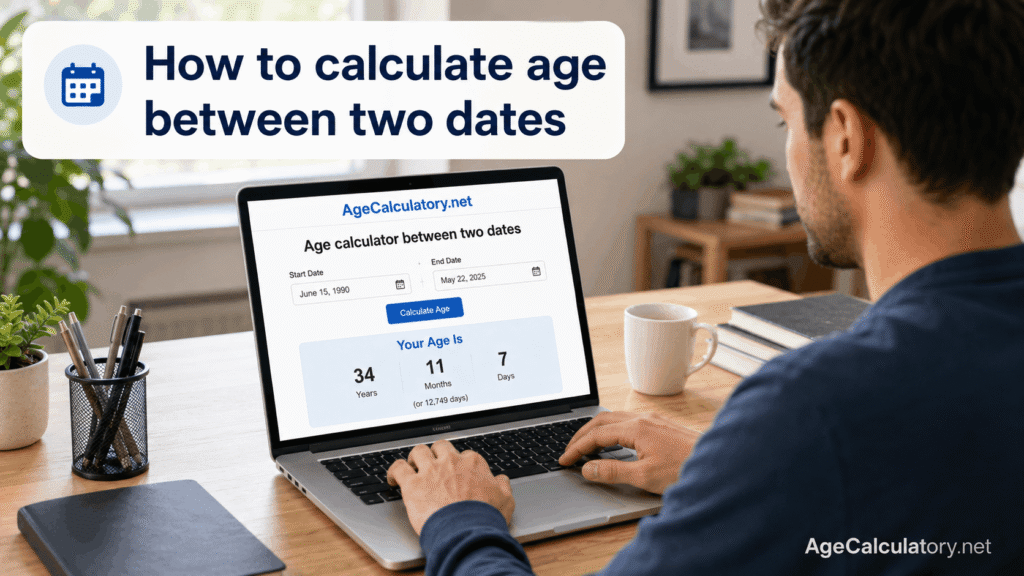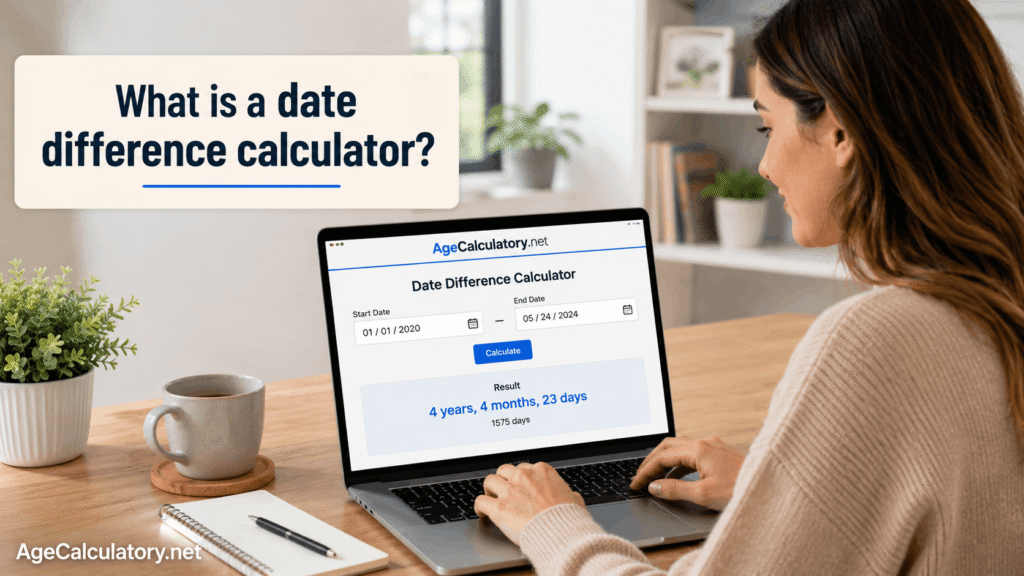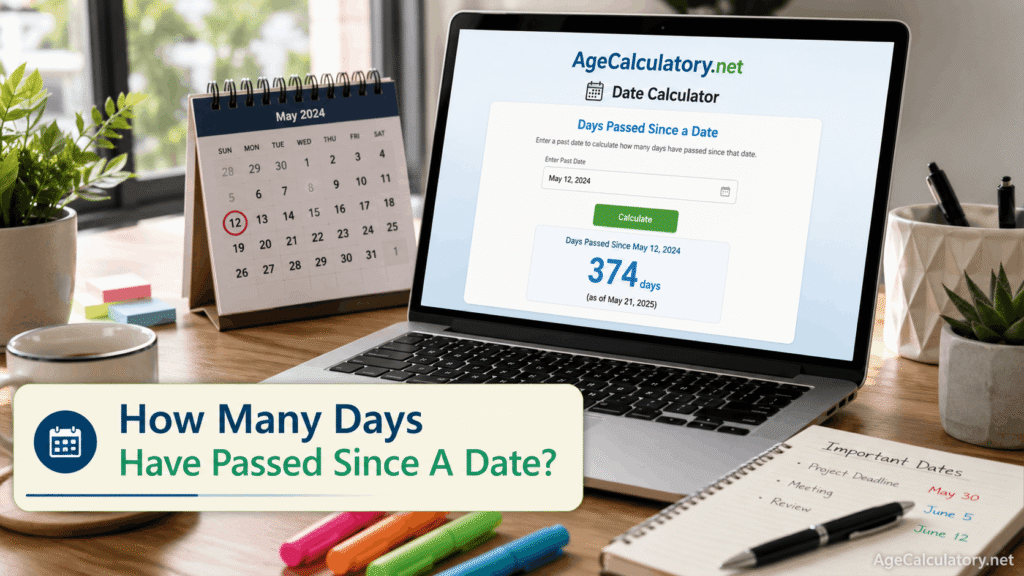
Sometimes you may want to know how many days have passed since a particular date. It may be a birthday, wedding day, job joining date, school admission date, graduation day, project start date, or any personal memory.
A days since calculator makes this easy. You enter the old date as the start date and today’s date as the end date. The calculator then shows the total number of days that have passed between both dates.
What does days passed since a date mean?
Days passed since a date means the number of days between a past date and today. For example, if an event happened on 1 January and today is 15 January, then 14 days have passed if you use normal date difference counting.
This type of calculation is useful when you want to measure time from a past event. It helps you understand how long it has been since something happened.
Why people calculate days since a date
People calculate days since a date for many reasons. Some people use it for memories, while others use it for records, deadlines, project tracking, or personal milestones.
For example, you may want to know how many days have passed since you started a job. You may also want to know how many days have passed since a baby was born or since you began a fitness plan.
What details you need
You need two dates for this calculation. The first date is the past date you want to count from, and the second date is usually today’s date.
Example:
Past date: 1 January 2026
Today’s date: 15 January 2026
The calculator compares both dates and shows how many days have passed.
Simple example
Suppose an event happened on 1 May 2026 and today is 10 May 2026. The number of days passed is 9 days if the start date is not counted as a completed day.
This means 9 full days have passed after 1 May. If you are using inclusive counting, the result may be different because inclusive counting can count both the start and end date.
Days since birthday
You can use this calculation to know how many days have passed since your last birthday. This is useful if you want to track birthday milestones or plan your next birthday countdown.
For example, if your birthday was 40 days ago, you can easily understand how far you are from your last birthday and how much time remains until the next one.
Days since job joining date
Many people want to know how many days they have worked since joining a job. You can enter your joining date as the start date and today as the end date.
This can help you understand your work duration in days. For resumes and official purposes, you may also calculate years, months, and days.
Days since school or college admission
Parents and students may calculate how many days have passed since school or college admission. This can be useful for academic records, personal memories, or tracking the length of a course.
For long durations, days alone may feel large. In that case, you can also calculate the duration in years, months, and days.
Days since an important event
Important events can include weddings, anniversaries, travel dates, business launches, website launches, or personal achievements. A days since calculator helps you track exactly how many days have passed.
This can be useful for social media posts too. For example, you may write, “100 days since we started this journey.”
Difference between days since and days left
Days since means counting from a past date to today. Days left means counting from today to a future date.
Both calculations use date difference logic, but the direction is different. One looks backward, while the other looks forward.
Normal counting vs inclusive counting
Normal date difference counts the number of full days passed between two dates. For example, from today to tomorrow is 1 day.
Inclusive counting counts both the start date and end date. This method may be used in some leave, travel, or event calculations. Always check which method is needed for your purpose.
Why leap years matter
Leap years matter when the date range includes February 29. A leap year has 366 days instead of 365 days, so the total day count can change.
A good date calculator handles leap years automatically. This is better than rough manual counting because calendar rules can be easy to miss.
Common mistakes
One common mistake is entering the wrong date format. For example, 05/10/2026 may mean 5 October or 10 May depending on the format.
Another mistake is not knowing whether to use normal counting or inclusive counting. If you need the result for official or work purposes, check the required counting method.
Use AgeCalculatory.net
You can use AgeCalculatory.net to find how many days have passed since a date. Enter the past date and use today’s date as the end date.
This can help with birthdays, memories, job duration, project tracking, school records, and personal milestones. It saves time and avoids manual calendar mistakes.
Frequently Asked Questions
How do I find how many days have passed since a date?
Enter the past date and today’s date into a date calculator. The tool will compare both dates and show the number of days passed.
Can I calculate days since my birthday?
Yes. Use your last birthday date as the start date and today as the end date.
Can I calculate days since a job joining date?
Yes. Enter your joining date and today’s date to calculate the number of days passed.
Does the calculator count the start date?
It depends on the method. Normal difference counting usually does not count the start date as a completed day, while inclusive counting may count it.
Do leap years affect days passed?
Yes. Leap years can affect the total day count if the date range includes February 29.
Conclusion
Finding how many days have passed since a date is useful for memories, records, events, birthdays, work duration, and personal tracking. It gives you a clear number instead of a rough guess.
The most important thing is to enter the correct past date and use the correct counting method. A proper calculator can handle leap years, month lengths, and date differences more accurately than manual counting.
Use AgeCalculatory.net to calculate days passed since any date quickly and clearly.